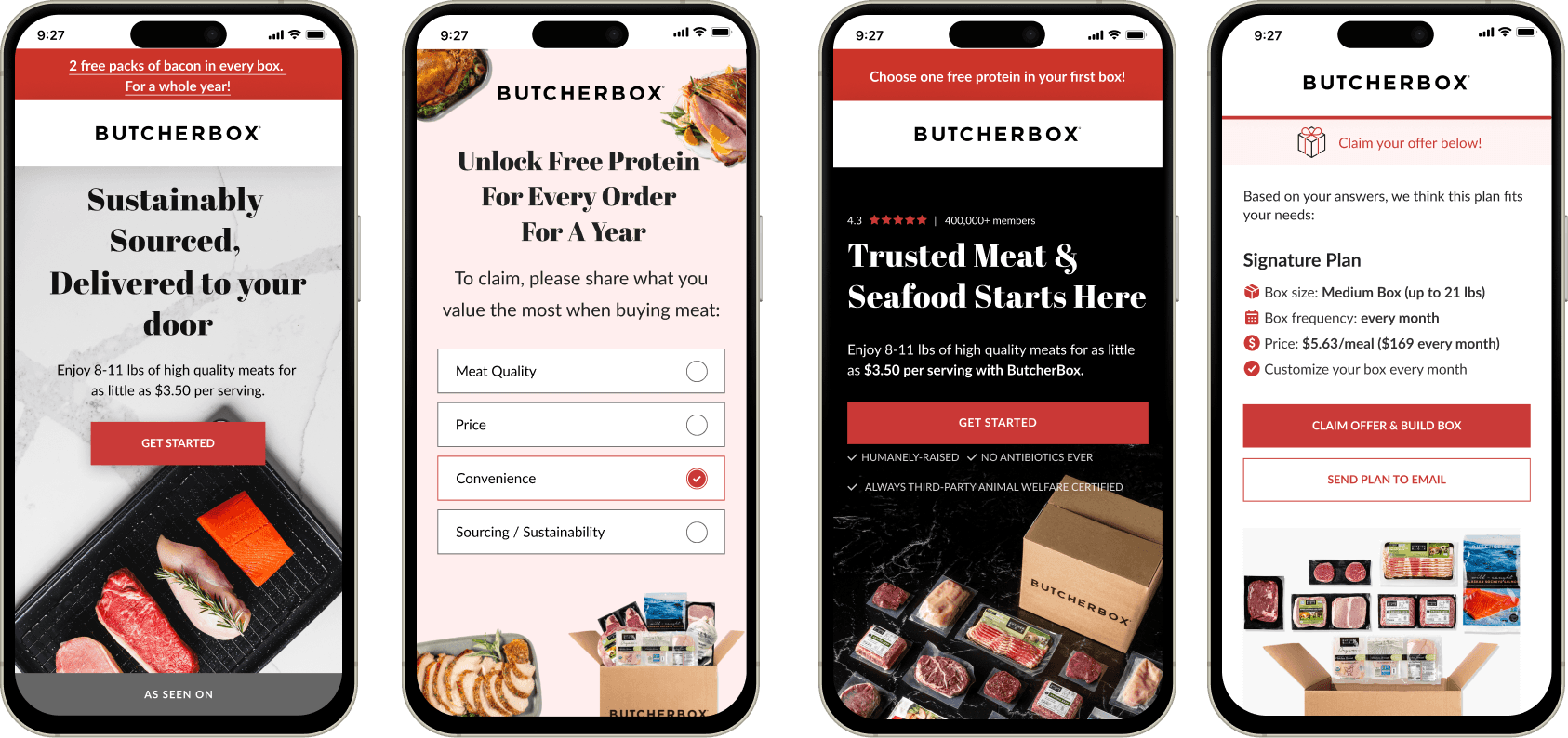

Building a Continuous CRO Engine for a DTC Meat Subscription Brand
A long-term performance design partnership spanning 14 homepage iterations, multiple quiz formats, and a simplified product module where every test informed the next, and our wins reshaped the brand's own website and product decisions.
DTC
Subscription Services
A/B Testing
User Interviews
ROLE
Sr. UI/UX Designer & CRO Specialist
ENGAGEMENT
Ongoing since September 2023
TOOLS
Figma, Hotjar, UserTesting, Adobe Creative Suite
METHODS
User Interviews, Competitive Analysis, Heatmap Analysis, A/B Testing, Usability Testing, Wireframing, Prototyping
The Challenge
ButcherBox needed more than a one-time page redesign — they needed a systematic testing engine that could sustain continuous improvement across dozens of surfaces, multiple channels, and a high volume of concurrent tests.
The challenge wasn't a single underperforming page. It was building a process that would compound wins over time across Meta, Search, and TikTok simultaneously.
Research & Process
Step 1: Audit & Competitive Analysis
At the start of every new client partnership, we begin with a structured audit of the highest-spending pages. Rather than jumping straight into redesign, we systematically pinpointed where the page was falling short of paid media best practices: weak above-the-fold value props, unclear CTAs, missing trust signals, friction in the conversion path.
We also run this alongside a competitive analysis — mapping what direct and indirect competitors were doing across their own paid experiences. This gave us two things simultaneously: a clear picture of where ButcherBox was leaving conversion on the table, and a calibrated understanding of industry best practices and whitespace opportunities specific to the DTC subscription space.
Together the audit and competitive analysis became the foundation of every roadmap we built. It grounded every hypothesis in evidence before a single frame was designed.
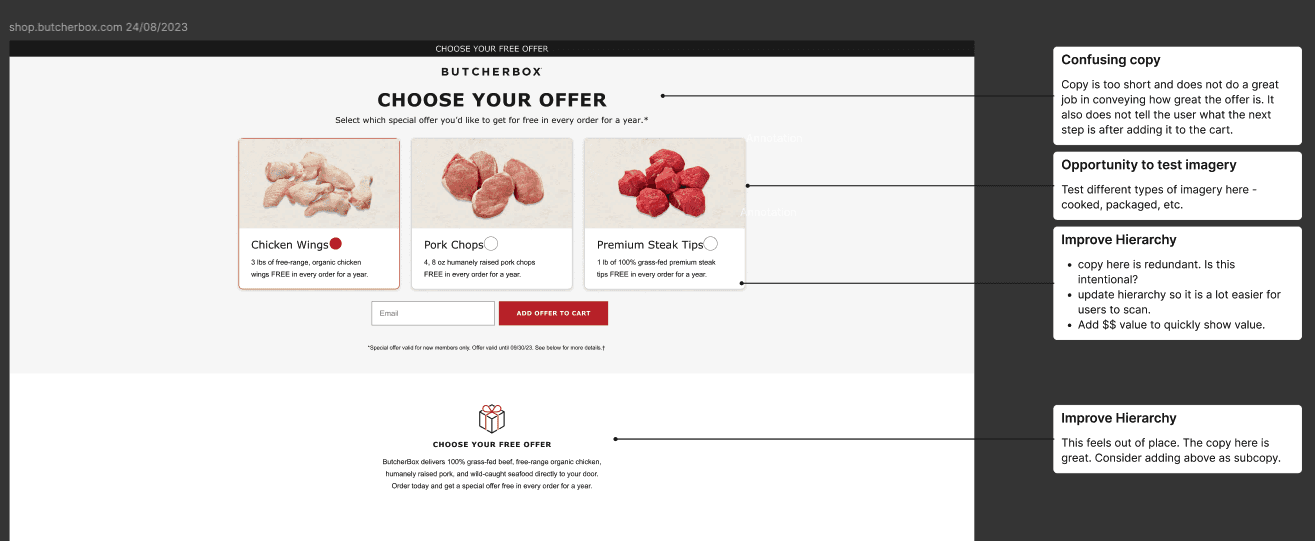
Sample audit
Step 2: Innovation Syncs
With the audit complete, we established a recurring quarterly cross-functional ritual where we bring together internal and external teams to critique our current pages and competitor pages and align on testing priorities. These sessions became the strategic heartbeat of the engagement. Most roadmap decisions traced back to something surfaced in a sync.
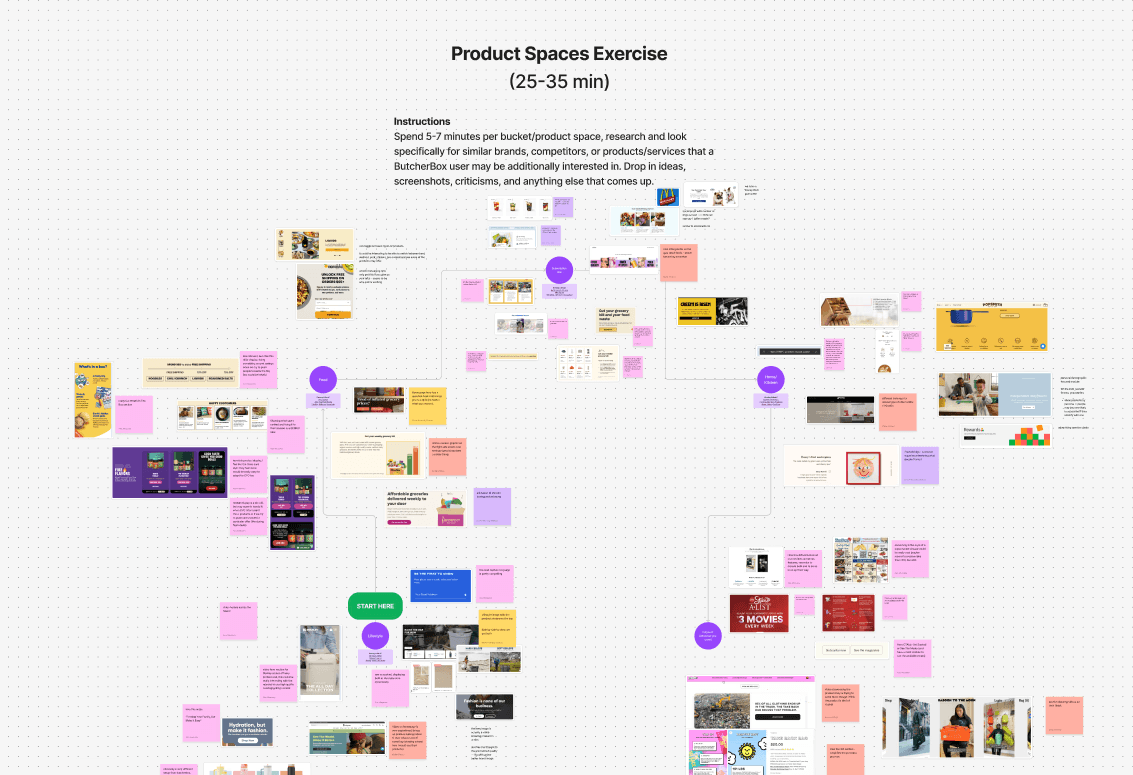
Sample innovation sync exercise
Step 3: Continuous User Interviews & Behavioral Analytics
Rather than front-loading research at kickoff, we embedded user interviews throughout the engagement — interviewing users on both our test pages and ButcherBox's own site to understand not just what they did, but why. What built confidence? What created hesitation? What almost made them leave?
Heatmap data ran in parallel — giving us quantitative signal on where users were dropping off and what was drawing unexpected attention.
Qualitative research told us the why. Behavioral analytics confirmed the where. Together they made every subsequent test smarter than the last.
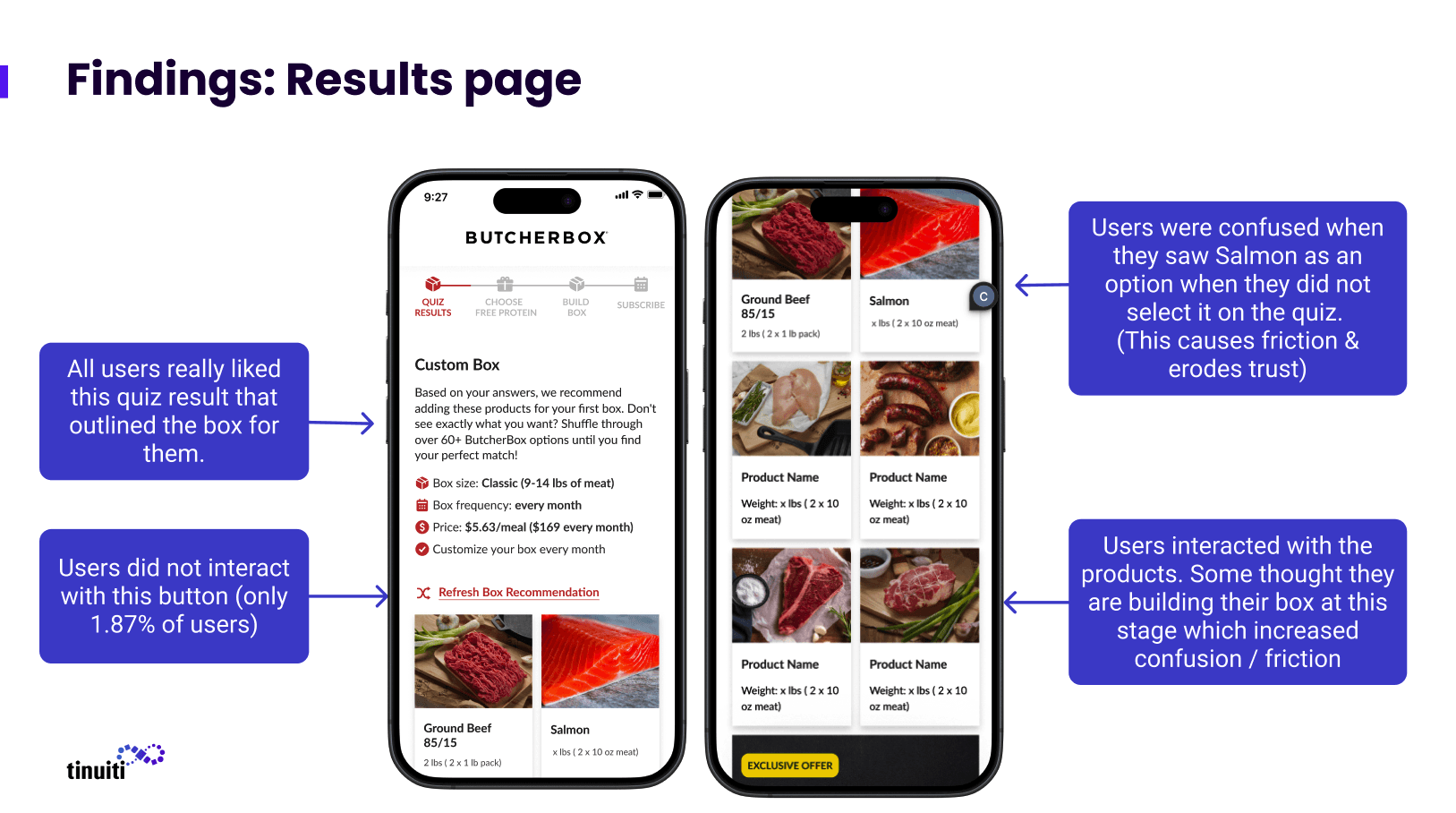
User Interview insights for Box Recommendation Quiz 1
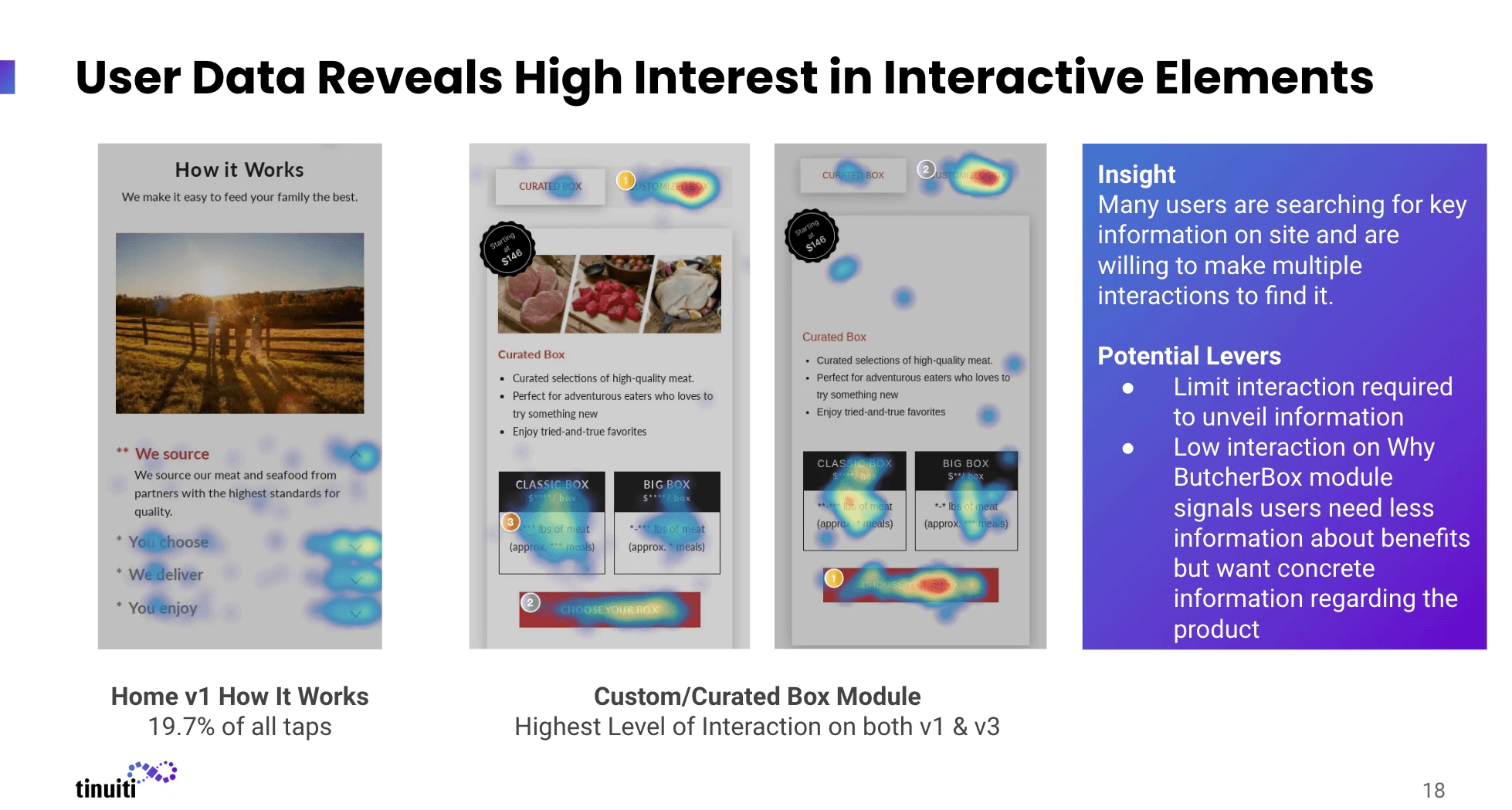
Heatmap insights
Key Decisions & Results
Commitment to testing against the current Homepage champion (now at v14)
Every new version was tested against the existing homepage winner and never assuming a win was permanent. We compounded gains iteratively rather than chasing one-time lifts.
Selected wins:
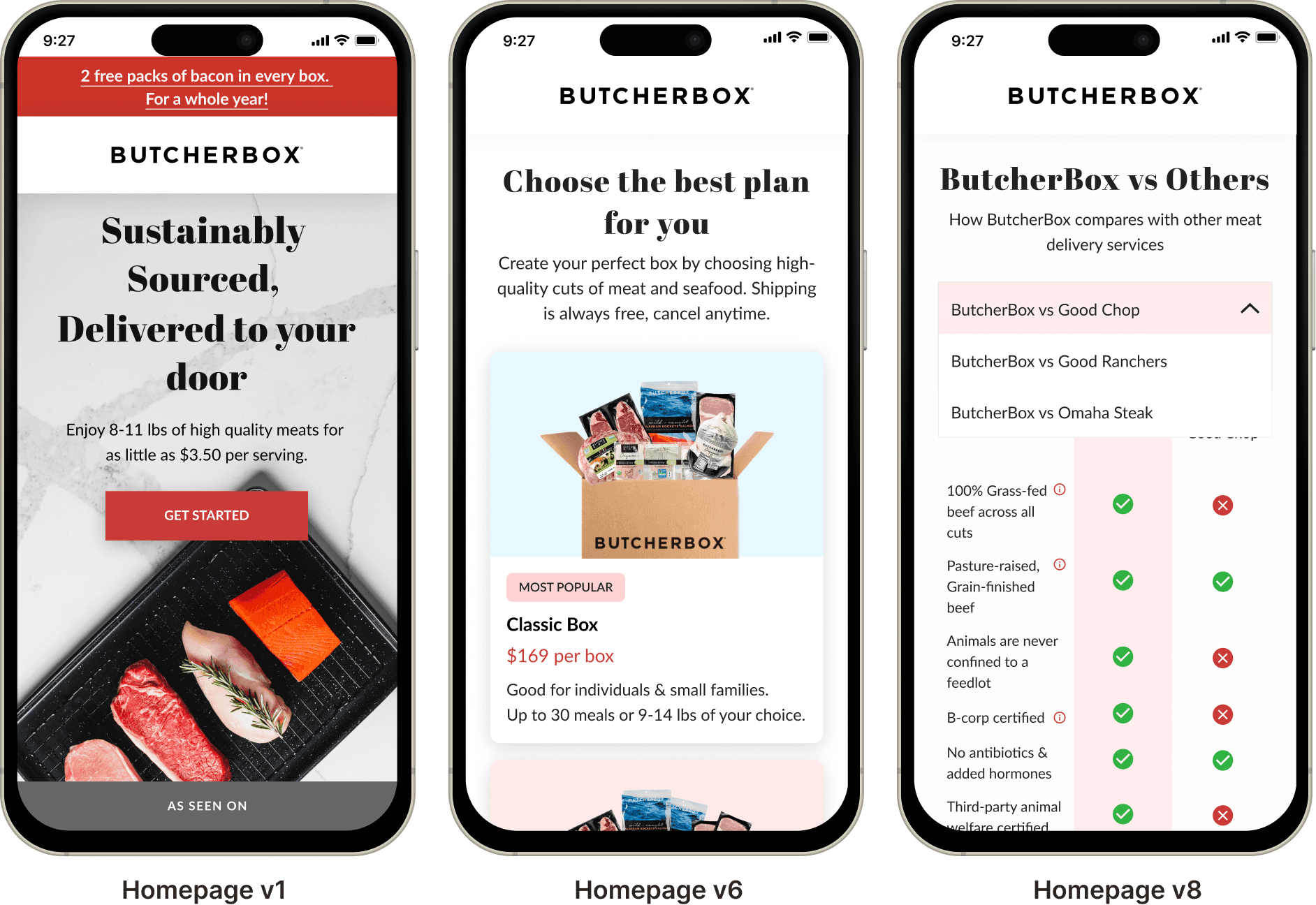
+31% CR, +88% Lead CR (Home v1 )
+138% CR (Home v6)
+12% CR, +111 % Lead CR (Home v8)
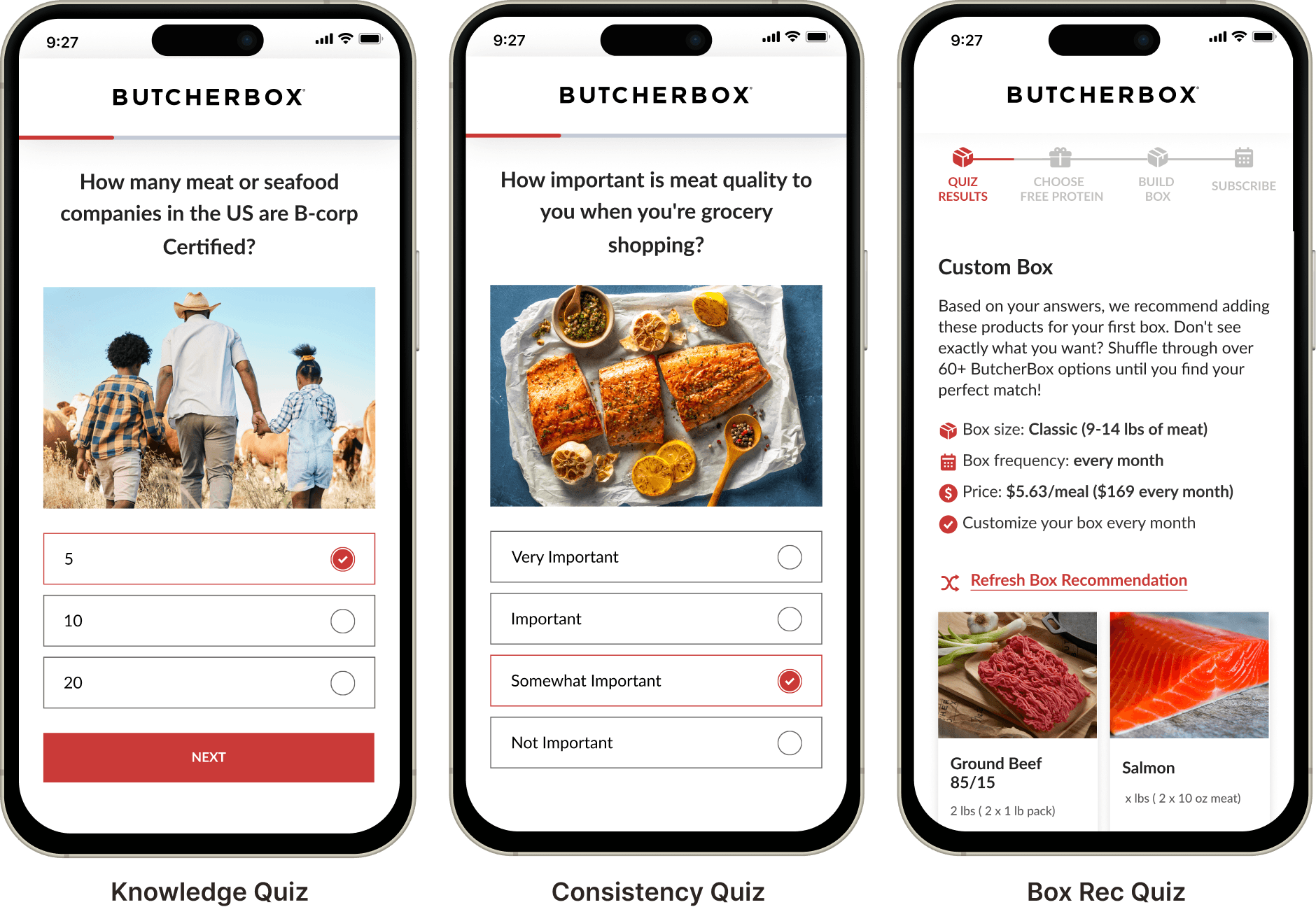
Tested multiple quiz formats to find the right interactive funnel
We experimented with different quizzes: Consistency, Knowledge (trivia-style), and a Box Recommendation quiz to expand funnel and unlock new user subsets.
Result:
- 21% CPA, -43% CPL - Knowledge quiz (Prospecting)
+21% Lead Gen and +24% CR - Consistency quiz win over Knowledge quiz
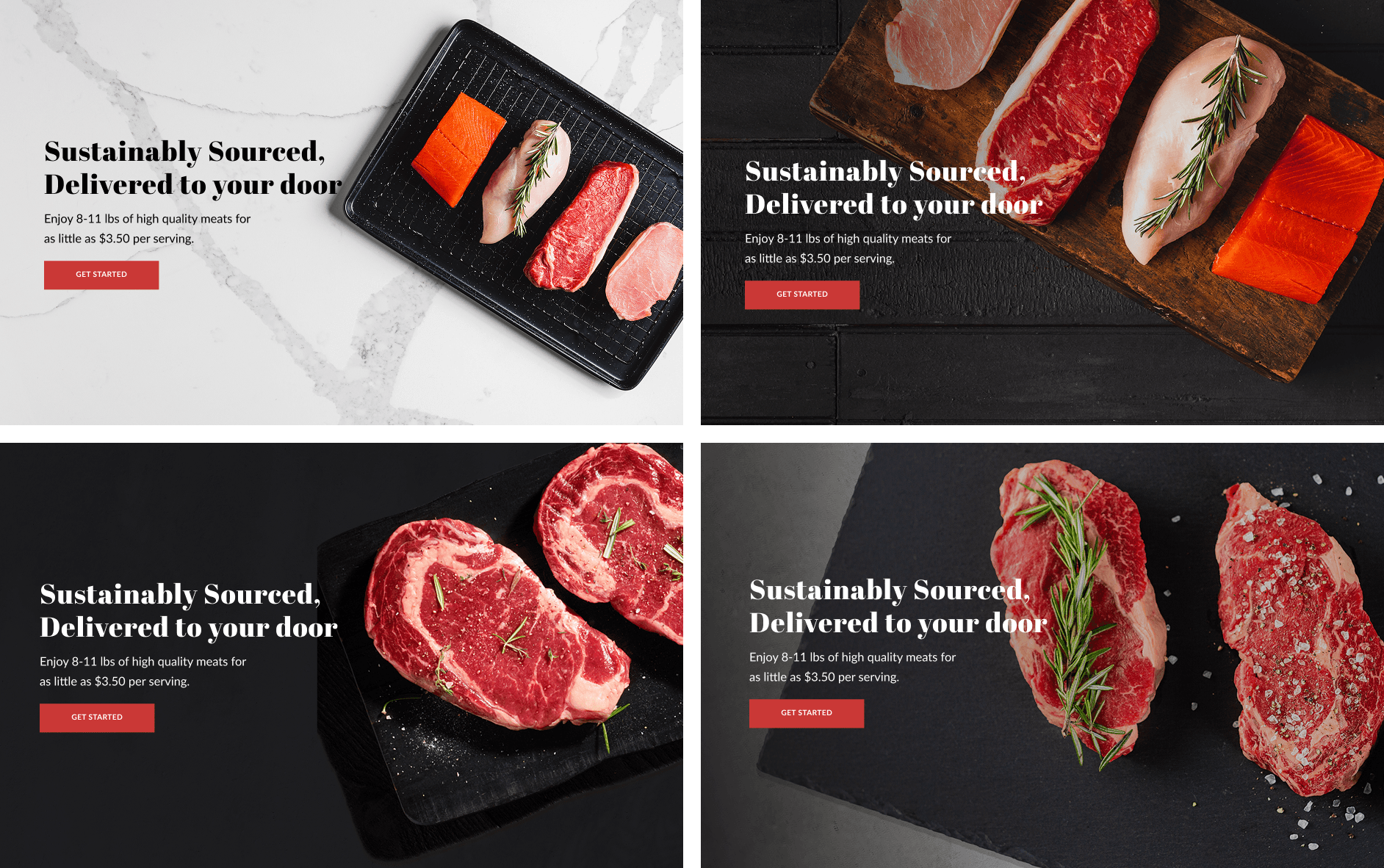
Ran small-bet imagery tests alongside full redesigns
Not every test needed to be a full page overhaul. A 4-cell hero imagery test (white vs. black background, steak only vs. all meats shown) was low effort but high signal.
Result:
+33% CR on black background + steak image
+14% CR on steak images,
+16% CR on black background
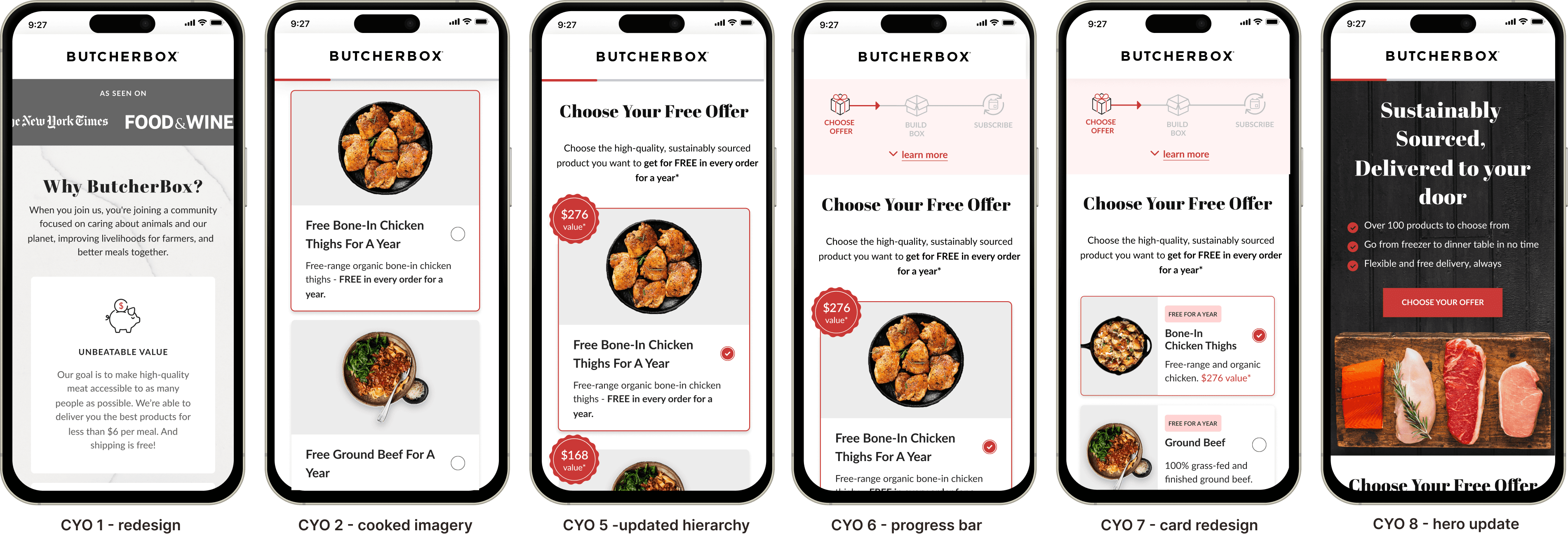
Ran iterative testing on the offer page experience (now at v10)
Users arriving from the homepage CTA landed on the CYO page- a high-stakes moment in the funnel where purchase intent was highest but drop-off was significant.
We tested across multiple dimensions:
Messaging — subscription priming copy vs. offer-focused copy
Imagery — cooked vs. raw meat photography
Layout — card arrangements and visual hierarchy
Progress indicators — incorporating a progress bar to reduce abandonment
Page density — compact offer-only pages with minimal supporting modules vs. information-heavy pages that built more context before the ask
Each iteration was tested against the current champion, building a compounding understanding of what drove users to complete their order vs. abandon at the final step.
Result:
+10% CR CYO v2 vs v1, +5% CR CYO v3 vs v2
Designed a custom box module that simplified the selection experience
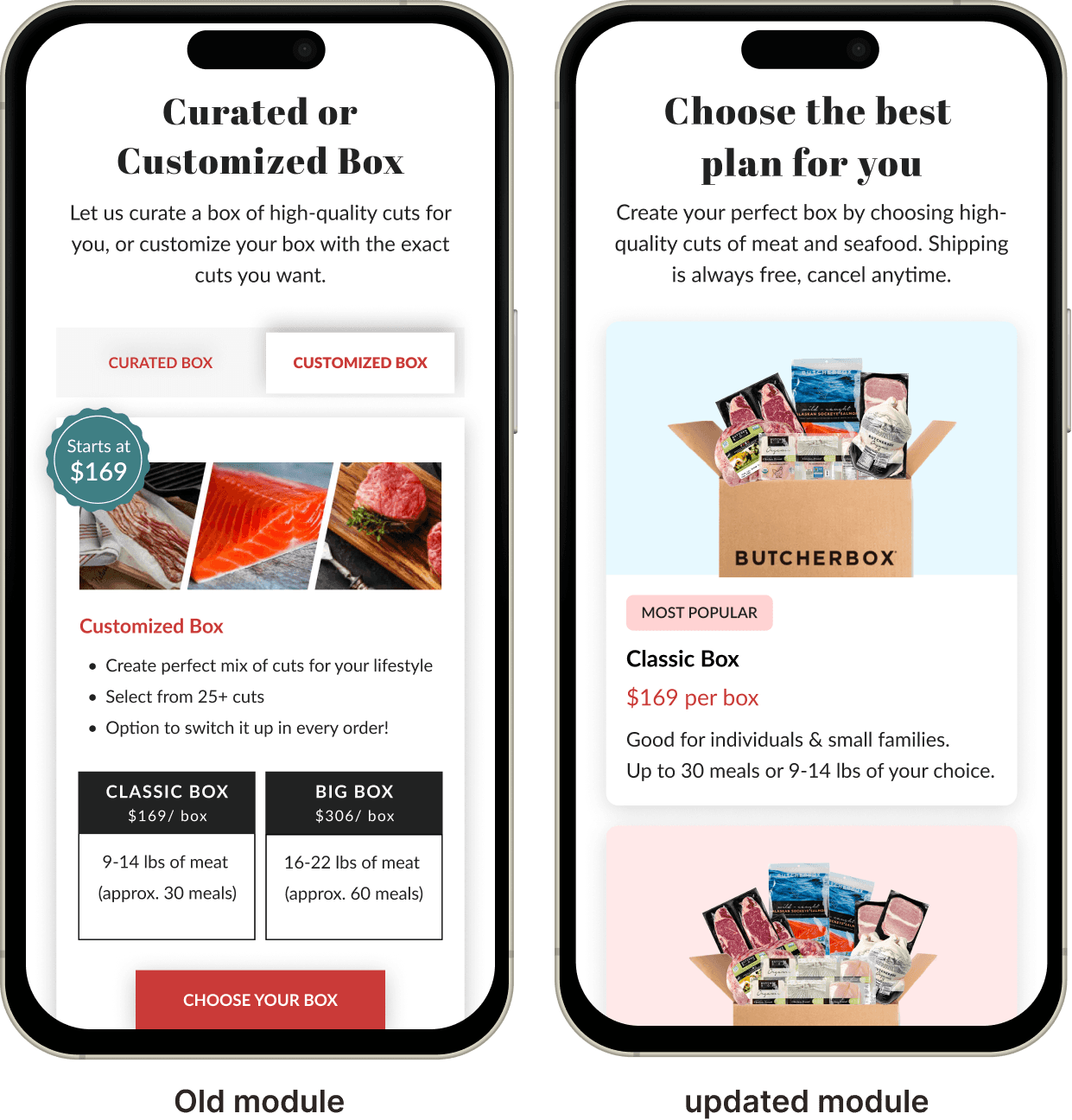
ButcherBox's existing product structure was complex. User interviews consistently surfaced the same friction — users didn't know which box was right for them.
We tested a simplified custom box module that reduced decision fatigue and made the path to purchase clearer.
Result:
+138% CR - significant enough that ButcherBox used it to simplify their actual product offerings
Key Takeaway
Long-term CRO partnership works differently than project-based design. The wins compound. The research builds on itself and when you stay close enough to a client long enough, your test results stop being landing page metrics - they start informing how the brand builds its product.
The most meaningful measure of this engagement isn't any single test result. It's that our work crossed the line from performance design into strategic product influence.